Post Nasal Drip and Nasal-Sinus Congestion Will Transform a Case of 'Normal' Breath into BAD Breath and 'Bad' Breath into HORRIBLE Breath!
Bad Breath> Nasal and Sinus Care > Post Nasal Drip
PAGE 1 | PAGE 2
New Article by Dr. Harold Katz - Founder, California Breath Clinics
- How to Eliminate That Annoying 'Frog-in-the-Throat' Feeling!
- Why Your Over-the-Counter Anti Histamine Could Be Making The Problem Even Worse!
- If You Have Post-Nasal Drip - It's Guaranteed To Affect Your Breath!
Bad Breath is very closely related to post nasal drip, excess mucus, sinus problems, your tonsils, and tonsiloliths.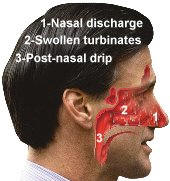
Every case of bad breath is different and that there is no such thing as one formula to treat every case of halitosis.
The bacteria which cause bad breath and sour/bitter/metallic tastes are anaerobic (live without oxygen). Their goal in life is to break down the proteins in foods that we eat. However, under certain conditions, they will also start to break down the proteins found in mucus and phlegm.
Therefore, those people who suffer from post nasal drip, sinus problems, and other such ailments are more prone to bad breath and lousy tastes because the bacteria use the mucus as a food source and start to extract sulfur compounds from the amino acids that make up the proteins found in all this excess mucus.
Scientifically, the anaerobic bacteria that cause bad breath "love" the amino acids Cysteine and Methionine, which are the building blocks of the proteins that are found in mucus (and phlegm) and in dairy foods, too. In fact, many people notice that when they drink too much milk or eat too much cheese they end up with more mucous or phlegm in their throat. This is a natural reaction for many people and unfortunately, ends up causing more bad breath and lousy taste.
If you still have your tonsils, you may be harboring a higher number of the bacteria which can lead to an "interesting" and very often misunderstood phenomenon, called TONSILOLITHS. Literally translated, they are "tonsil stones" produced by the conglomeration of mucus draining down the back of the throat and the volatile sulfur compounds created by the bacteria which easily end up in the "nooks and crannies" of the tonsils, every time one swallows. I can't tell you how many stories I've heard from my patients who asked their dentist what these objects were, and more often than not the answer was 'food particles'. This couldn't be further from the truth.
If you suffer from excess mucus, sinus congestion and post nasal drip there are essentially only a few different routes that you can take:
- Use medication and or drugs to dry up the sinuses and prevent mucus buildup - all the while being careful to avoid a dry mouth, a likely side-effect of virtually all antihistamines. Dry mouth is the most common initiator of bad breath because it mimics an anaerobic environment, perfect for the "bugs" to pump out Volatile Sulfur Compounds. You should be careful about using any antihistamine too frequently - many are habit forming!
- Use TheraBreath Nasal Sinus Formula. By squeezing 3-4 drops into each nostril (and then lightly inhaling to move the potent formula through the sinus) twice daily, most people can finally experience that fresh breath and taste feeling by eliminating the production of sulfur compounds created by the reaction of mucus and the anaerobic sulfur producing bacteria…
- For chronic sinus problems, many patients will find relief by using the Hydropulse (an amazingly effective Nasal-Sinus Irrigator, designed by an Ear Nose & Throat specialist) to flush the sinuses. (Works even better when you add just 2-3 drops of AktivOxigen serum into the trough before each use).
- Minimize the amount of post-nasal drip in your throat and sinuses, and eliminate the #1 side effect of excess mucus (Bad Breath!) by using oxygenating oral care products, such as TheraBreath, TheraBreath PLUS, AktivOxigen, PerioTherapy, and TheraBrite.
Medication and Drugs MAY help Prevent Post-Nasal Drip, But At What Cost?
There are dozens of different over-the counter nasal decongestants and antihistamines you can use to help relieve congestion and dry up excess mucus, and some of them are very good at what they claim… but mostly they are TOO GOOD! They create an extremely dry mouth, which exacerbates Bad Breath. And even in cases where the dry mouth side effect is minimal, when you stop taking that medication the problem comes back, and almost always with a vengeance! This is because in some cases, your body will actually develop a resistance to any antihistamines or nasal decongestants, especially nasal sprays (be careful, because many sprays are habit forming - but NOT TheraBreath formulas!)
Suffice it to say, this should NOT be an option that you pursue.
Continued - Read On ....
PAGE 1 | PAGE 2
|