2. If a syringe of Opalescence contains more,
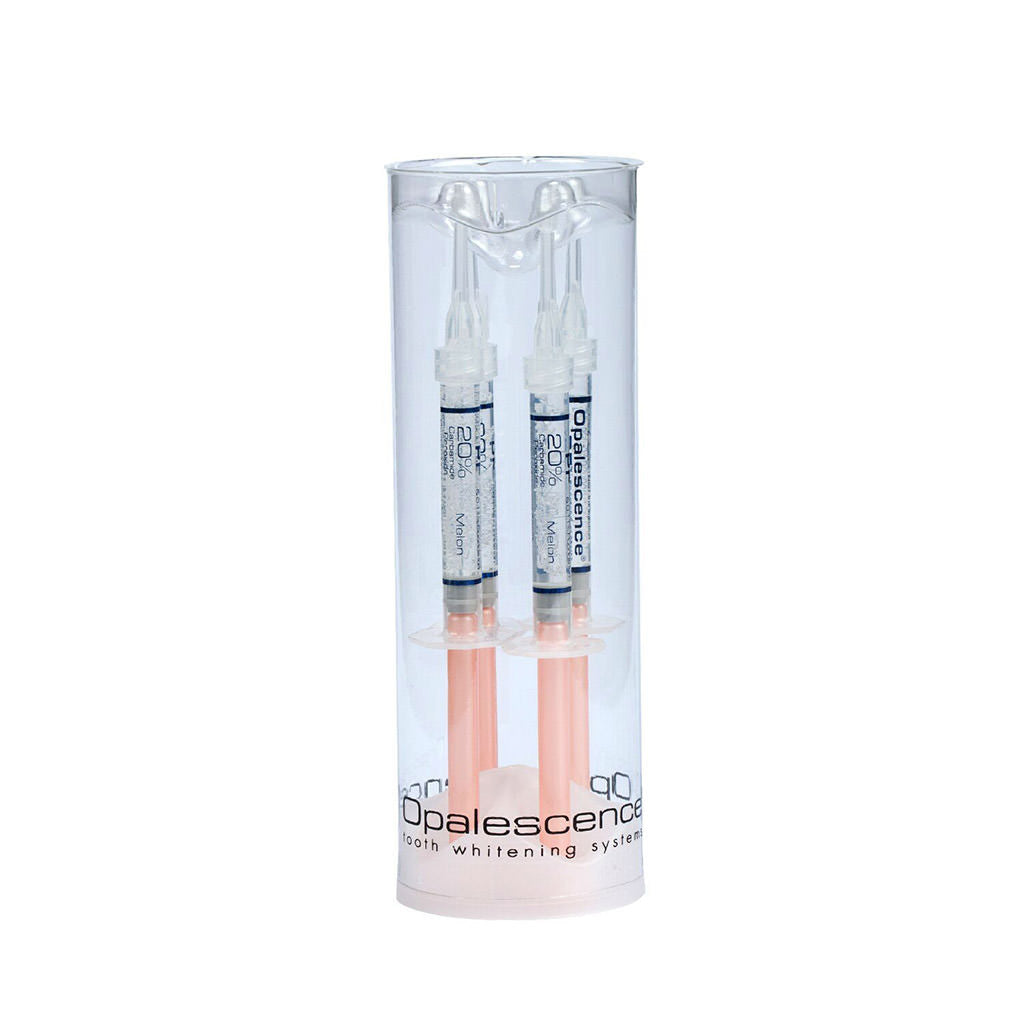
smaller bubbles than usual, does it mean the product has been activated
before its application?
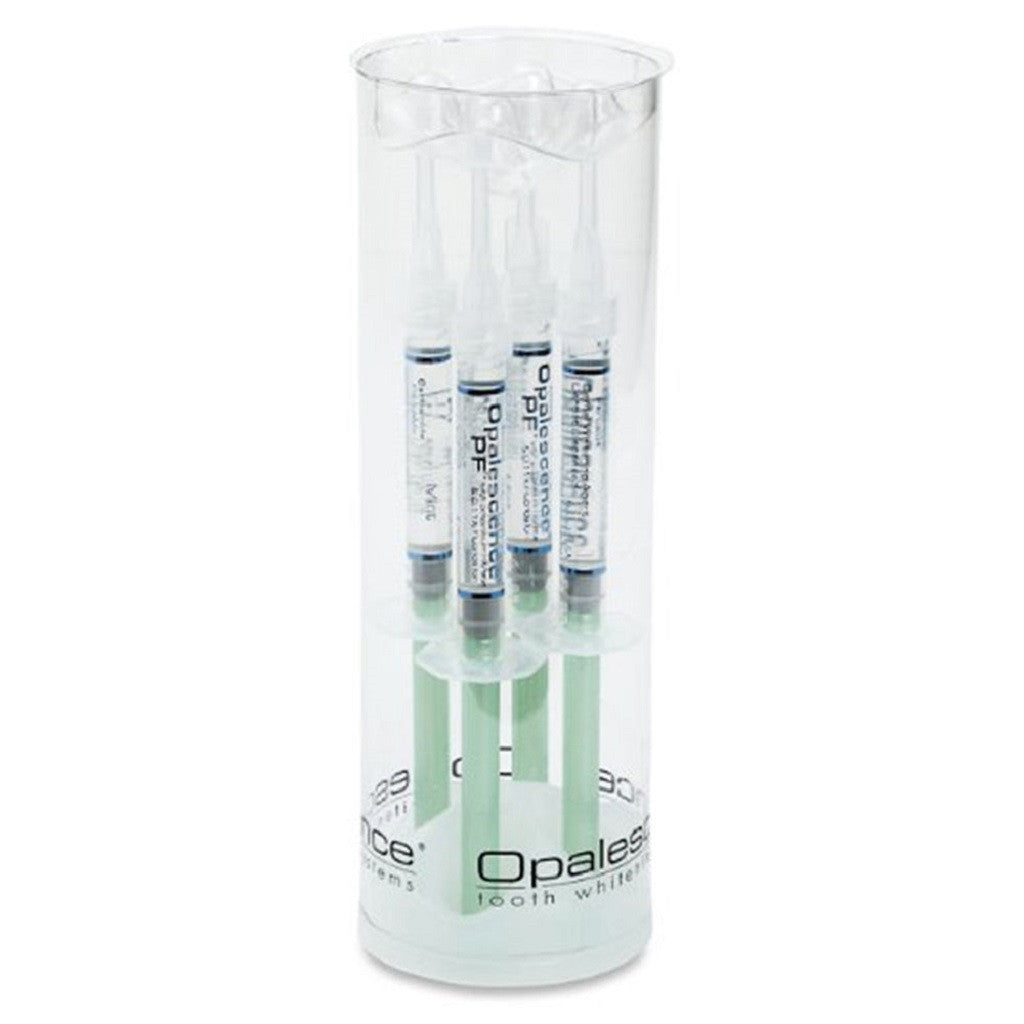
From flavor to flavor and depending on the filling process,
Opalescence syringes can be found with no bubbles or with many
small bubbles. Many of the pictures in our literature and catalog
show the product with many small bubbles. These bubbles do not
result from peroxide decomposition in the syringe; they are
simply inherent in a thick formulation such as this.
3. Why does Opalescence change to a dark purple/black
color when it comes in contact with amalgam?
The dark purple coloration that may appear in the tray following
bleaching adjacent to older amalgams is normal and has proven
inconsequential, based on years of clinical use. No adverse/detrimental
effect on the amalgam restorations has been experienced. It
has been theorized that the zinc in old amalgams may be the
cause of the discoloration.
Whitening is a modification of the anatomy relative to the
oxidation process, which eliminates the dark, disfiguring intra-dental
organic dyes and stains by breaking down the conjugated double
bonds of the color (selective light) absorbing offending molecules.
Conjugated double bonds occur in many different molecular configured
color-absorbing molecules. They are part of said molecule, which
is ... C-C=C-C=C-C= ... etc. Bleaching oxidizes the internal
tooth-disfiguring color molecules, changing them to alcohols,
ketones and terminal carboxylic acids, etc., which eliminates
the light-absorbing properties of the conjugated bonds. These
are not cells or the constituents of cells; they are unwanted
dye molecules within the noncellular matrix, namely dentin and
enamel.
5. When bleaching teeth, why does the cervical
portion of the tooth respond less to treatment than the incisal
edge?
There are a few reasons for this occurrence. The simplest
is that the enamel is thinner at the gingival third, so the
dentin shows through more easily. The dentin can take longer
to bleach than the enamel of the incisal third. The gingival
third may not have caught up with the rest of the tooth yet.
6. How long should you wait to bond after
a bleaching treatment?
Normally 7-10 days. However, there was a study at University
of Texas (Barghi N, Morgan J. Reducing the Adverse Effect of
Bleaching on Composite Enamel Bond. Journal of Esthetic Dentistry,
1994, Volume 6, Issue 4; 157-161) that indicated that when in
a pinch, you could bond immediately after bleaching (using up
to 35% carbamide peroxide) by applying an acetone-based, A &
B mixed- type dentin bonding agent system prior to bonding.
7. What is the youngest age at which a child
can bleach?
There is very little published on the whitening of primary
dentition. Although the study only deals with adult dentition,
clinical trials on nightguard vital bleaching techniques at
the University of North Carolina have found no predictors of
sensitivity relative to patient age, pulpal size, presence of
exposed dentin or cementum and caries. Clinical experience has
shown that even young people’s teeth will bleach with no surprising
side effects. We do recommend that in order to ensure an even
level of whitening, all of the permanent dentition should have
fully erupted. If the child bleaches before this has occurred,
the teeth that erupt proceeding bleaching will be a darker shade
than those that have previously been bleached. Another important
consideration is whether the child would be capable of following
the doctor’s recommendations and instructions.
8. If a tooth has been restored with composite,
does the restoration need to be removed before the whitening process?
It seems that bleaching the unrestored surface would cause sensitivity
since the peroxide goes into the dentin.
As per the Opalescence instructions, it is important to have
all exposed dentin properly sealed due to possible sensitivity
occurring during the whitening process. Hence, it would be recommended
to leave the existing composite restoration intact during the
whitening procedure. Another consideration for leaving the restoration
intact is due to the fact that there is no way of predicting
what shade a person’s teeth will be after whitening. For this
reason, it is better to replace restorations after the whitening
procedure to ensure that the proper shade of composite is used.
However, it is important to wait two weeks after whitening before
a restoration is replaced in order to give time for the shade
of the whitened teeth to stabilize. This will also allow the
peroxide to diffuse out of the teeth, which will give better
bonds.
There are several reasons for a non-vital tooth to turn dark.
One of the reasons is intra-coronal bleeding. Blood gets trapped
in the dentinal tubules and the hemosiderin of the blood blackens.
10. If a patient that has previously suffered
with carcinoma in situ on the floor of the mouth, would the use
of 10% carbamide peroxide increase the risk of a recurrence? The
patient has been clear of the problem for 3 years.
Studies, and as backed up by Yimming Li, show that the peroxide
will not add to the carcinoma phenomena.